

Product
Introducing Reports: An Extensible Reporting Framework for Socket Data
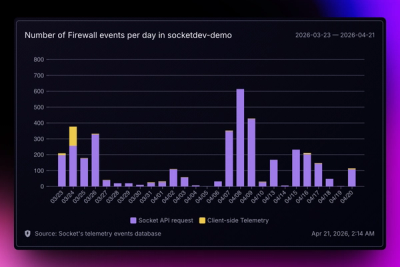
Explore exportable charts for vulnerabilities, dependencies, and usage with Reports, Socket’s new extensible reporting framework.
By André Staltz - Apr 21, 2026
github.com/ciaron/hpglgraphics
Advanced tools
The following describes how to set up a Processing library project in Eclipse and build it successfully, and to make your library ready for distribution.
There are two options to import the template project into Eclipse: using a Git fork or using a downloaded package. If you are not familiar with Git or GitHub, you should opt for the downloaded package.
master branch on the next screen, and click "Next >".processing-library-template automatically, click "Finish".processing-library-template project, and select Refactor → Rename... from the menu that pops up.core.jar to your build path. It is recommended that a copy of core.jar is located in your Eclipse workspace in a libs folder. If the libs folder does not exist yet, create it. Read the section below regarding where to find the core.jar file.resources folder inside of your Java project and double-click the build.properties file. You should see its contents in the Eclipse editor.resources/build.xml file in there, and a new item "ProcessingLibs" will appear.src.build.properties file.After having compiled and built your project successfully, you should be able to find your library in Processing's sketchbook folder, examples will be listed in Processing's sketchbook menu. Files that have been created for the distribution of the library are located in your Eclipse's workspace/yourProject/distribution folder. In there you will also find the web folder which contains the documentation, a ZIP file for downloading your library, a folder with examples as well as the index.html and CSS file.
To distribute your library please refer to the Library Guidelines.
If you want to share your library's source code, we recommend using an online repository available for free at GitHub.
The core.jar file contains the core classes of Processing and has to be part of your classpath when building a library. On Windows and Linux, this file is located in the Processing distribution folder inside a folder named lib. On Mac OS X, right-click the Processing.app and use "Show Package Contents" to see the guts. The core.jar file is inside Contents → Resources → Java. For further information about the classes in core.jar, you can see the source here and the developer documentation here.
If you created a libs folder as described above, put the libraries you need to add to your classpath in there. In the "Properties" of your Java project, navigate to Java Build Path → Libraries, and click "Add External JARs...". Select the .jar files from the libs folder that are required for compiling your project. Adjust the build.xml file accordingly.
The libs folder is recommended but not a requirement, nevertheless you need to specify where your .jar files are located in your system in order to add them to the classpath.
In case a library depends on system libraries, put these dependencies next to the .jar file. For example, Processing's opengl.jar library depends on JOGL hence the DLLs (for Windows) or jnilibs (for OS X) have to be located next to the opengl.jar file.
JDK stands for Java Development Kit whereas JRE stands for Java Runtime Environment. For developers it is recommended to work with a JDK instead of a JRE since more Java development related applications such as Javadoc are included. Javadoc is a requirement to properly compile and document a Processing library as described on the guidelines page.
You can have both a JDK and a JRE installed on your system. In Eclipse you need to specify which one you want to use.
This primarily affects Windows and Linux users (because the full JDK is installed by default on Mac OS X). It is recommended that you use the JDK instead of a JRE. The JDK can be downloaded from Oracle's download site. Also see the Java Platform Installation page, which contains useful information.
To change the JRE used to compile your Java project:
Ant is a Java-based build tool. For more information visit the Ant web site. Ant uses a file named build.xml to store build settings for a project.
Javadoc is an application that creates an HTML-based API documentation of Java code. You can check for its existence by typing javadoc on the command line. On Mac OS X, it is installed by default. On Windows and Linux, installing the JDK will also install the Javadoc tool.
FAQs
Unknown package
Did you know?

Socket for GitHub automatically highlights issues in each pull request and monitors the health of all your open source dependencies. Discover the contents of your packages and block harmful activity before you install or update your dependencies.
Product
Explore exportable charts for vulnerabilities, dependencies, and usage with Reports, Socket’s new extensible reporting framework.
Product
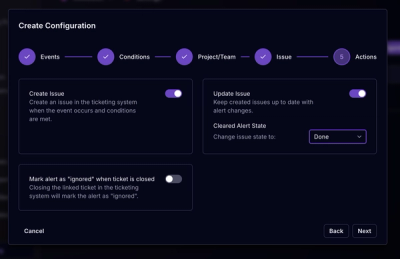
Socket for Jira lets teams turn alerts into Jira tickets with manual creation, automated ticketing rules, and two-way sync.
Company News
Socket won two 2026 Reppy Awards from RepVue, ranking in the top 5% of all sales orgs. AE Alexandra Lister shares what it's like to grow a sales career here.